How to Stimulate Collagen Production for Healthier Skin
Skin is a complex living system that reacts daily to our lifestyle, emotional state, nutrition, stress, sleep and other aspects. Over the years, we notice that it gradually loses elasticity, becomes thinner, wrinkles and irregularities appear. It has been proven that one of the main reasons for these changes is a decrease in the production of collagen, the main protein responsible for the elasticity and youthfulness of the skin. Let’s take a closer look at what collagen is and how to support its natural synthesis, which will not only slow down age-related changes, but also improve the overall condition of the skin at any age.
What is collagen: how does it affect the skin?
Collagen is a structural protein that forms the basis of the connective tissue of the body. It is found in skin, bones, tendons, ligaments, cartilage and even in the walls of blood vessels. In the skin, collagen forms a kind of “framework” that maintains its density, elasticity and smoothness. In principle, the human body is capable of synthesizing collagen from amino acids on its own, but it needs certain conditions for this, such as sufficient nutrients, absence of chronic inflammation and proper stimulation of fibroblasts (skin cells). Starting around age 25, the natural production of collagen gradually decreases. And after 35-40 years of age, this process accelerates, especially due to UV exposure, stress, smoking, lack of sleep and an unbalanced diet.
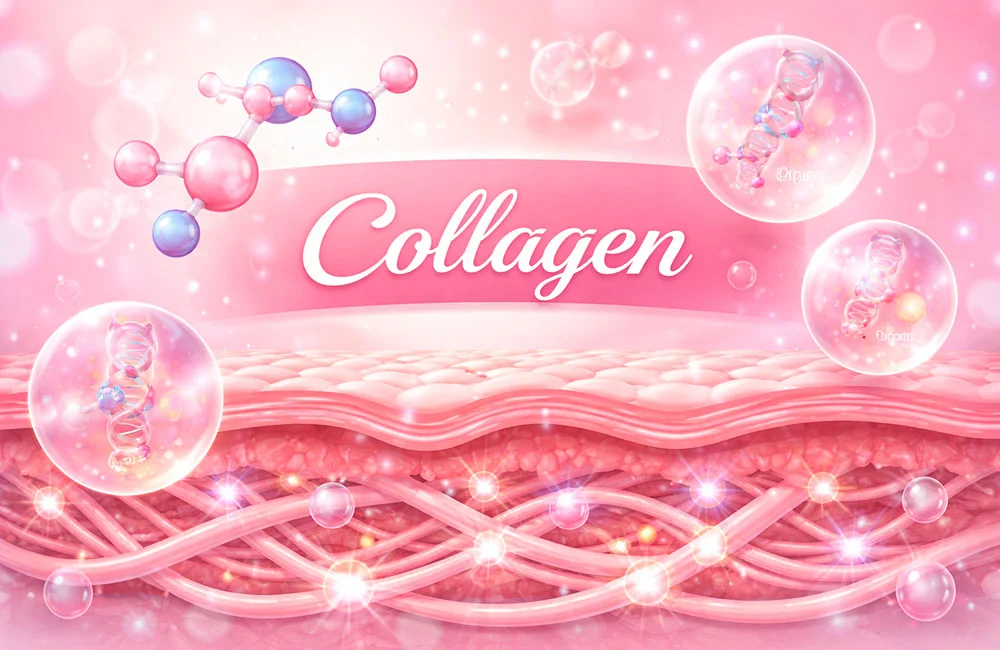
Collagen performs several important functions, on which directly depends on the appearance of the skin, namely its:
- Elasticity and density. It is this protein that is responsible for keeping the skin taut and resistant to breakage.
- Elasticity. Together with elastin, it allows the skin to stretch and return to its original state.
- Smoothness and even topography. Sufficient collagen levels reduce the depth of wrinkles and prevent the appearance of new ones.
- Healthy tone and radiance. It maintains normal blood circulation and cellular nutrition.
- Repair. This protein is involved in healing micro-damage and skin regeneration.
When collagen is reduced, the skin loses its protective and regenerative functions, resulting in flabbiness, dryness, changes in facial contours and texture.
How can collagen production be stimulated?
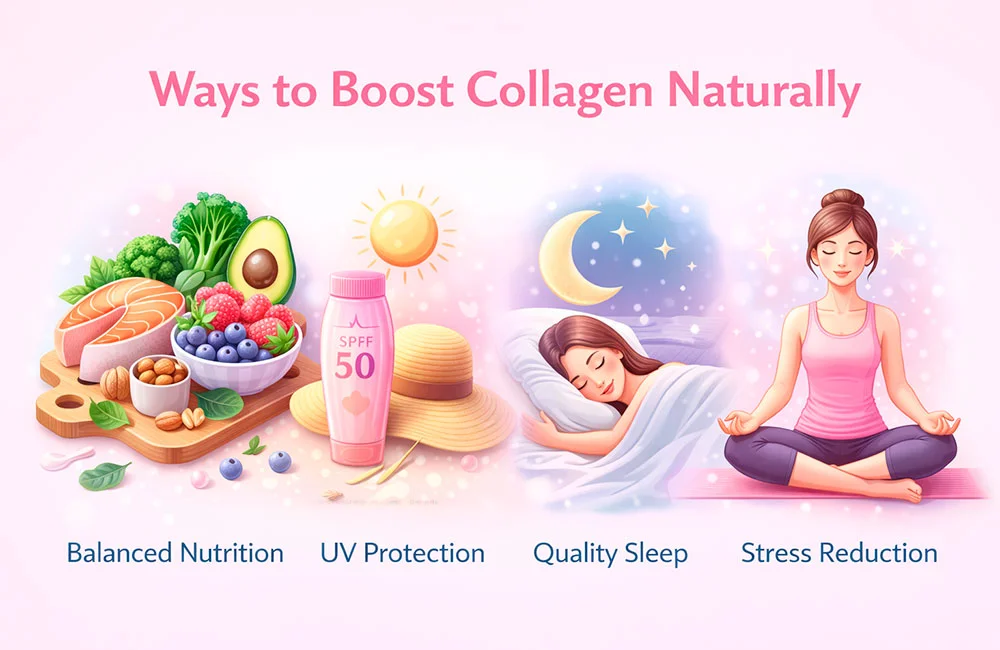
Collagen production can be stimulated naturally or through special procedures, which are much more effective. Among the main factors that we can influence on our own:
- Balanced nutrition. Enrich the diet with protein, vegetables, greens, berries and healthy fats.
- UV protection. UV radiation is one of the main destroyers of collagen fibers. So regular sun protection helps to preserve skin structure and slow down photo-aging.
- Quality sleep and stress reduction. During sleep, cell repair processes are activated, including collagen synthesis. Chronic stress, on the contrary, stimulates the production of cortisol, which accelerates the destruction of collagen.
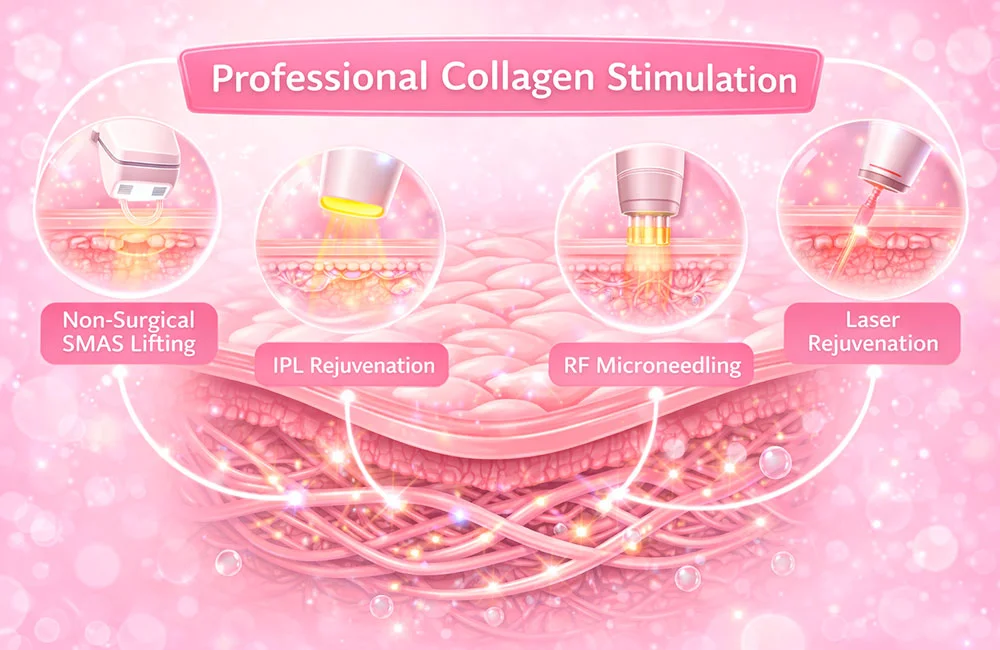
Especially as we age, natural methods may not be enough. That is why professional procedures that trigger deep skin renewal processes are becoming increasingly popular. They work not only on the surface, but also in the dermis, where collagen is directly formed. Modern techniques allow you to gently but effectively activate fibroblasts, improve the structure of the skin, make it denser, firmer and visually younger without drastic changes in appearance. Here are a few of the most sought-after procedures:
- Non-Surgical SMAS Lifting (HIFU). High-intensity focused ultrasound goes deep into the tissue layers, including the SMAS level, where it triggers the active formation of new collagen. This in turn increases the density and elasticity of the skin, makes the oval of the face more clear.
- IPL-rejuvenation. Light pulses penetrate into the deep layers of the skin, stimulating the production of collagen. Thus, it increases its elasticity and evens out its tone, as well as reduces laxity without compromising its integrity.
- RF microneedling. Radiofrequency energy gently warms the deep layers of the dermis, which leads to the reduction of collagen fibers and stimulates the synthesis of new ones. And controlled micropunctures activate natural regeneration processes. In response to microtraumas, the skin begins to intensively produce collagen and elastin. The result of this procedure will smooth the relief of the skin, improving skin tone, reducing post-acne, scars and enlarged pores.
- Laser rejuvenation. The laser affects the skin point by point, creating microzones of thermal action. This triggers active regeneration and the formation of a new collagen framework. Therefore, the skin is renewed at the cellular level, and with it wrinkles and pigmentation are reduced.
Based on all of the above, we can safely say that collagen is the basis of healthy, firm and well-groomed skin. Its level depends not only on age, but also on daily habits, lifestyle and quality of care. A combination of proper nutrition, protection from external factors and professional support gives the best results. If you want not just to slow down age-related changes, but to work comprehensively on the quality of your skin by stimulating collagen production, it is best to do so under the supervision of specialists. At Safi Miran Denver Med Spa, we can help you find the best collagen stimulation solutions tailored to your skin’s individual needs to keep it looking healthy, fresh and well-maintained for as long as possible.